
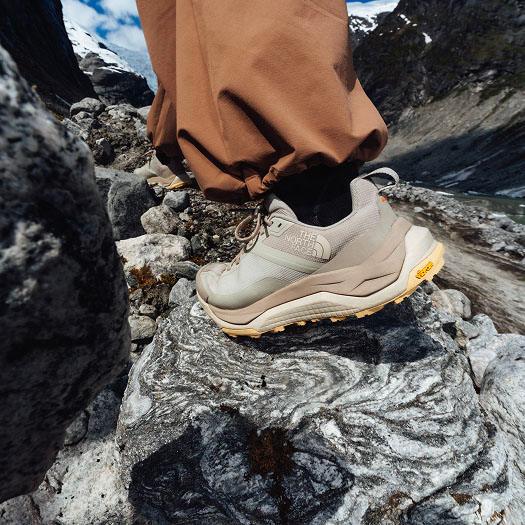
Waterproof Walking Shoes vs Boots
Since 1966, The North Face has supplied explorers and adventurers with high-performance outdoor equipment.
2025-12-16
From weekend warriors to extreme expeditions, the ethos remains the same - never stop exploring.
Walking and hiking in wet conditions requires the right choice of footwear. If your hiking footwear absorbs water, it will become heavier. Walking with wet feet is also uncomfortable and increases the risk of fungal infections. Finding the right waterproof walking shoes is therefore essential.
When deciding between waterproof walking shoes and boots, consider the terrain that you are likely to encounter. Lightweight and lower-profile shoes work well for trails and paths, while the extra support and rigidity of boots are ideal for uneven and challenging ground.
What’s the Difference Between Walking Boots and Walking Shoes?
Walking boots are designed with stability in mind. Thick, rigid soles improve grip and higher sections around the ankle increase support and protection. The materials used for the uppers will also be more durable. It’s worth remembering that all of these features that make the boots well suited for challenging terrain will add additional weight.
Walking shoes, on the other hand, are designed for less demanding conditions and can remain lightweight. With the look and feel of a sneaker, the sole unit will be more flexible, with lightweight uppers and a low cut finish around the ankle.
What is the Best Waterproof Walking Boot?
Waterproof walking boots should fit well and provide stability for your feet and ankles on rough ground. Consider your planned routes to help you decide on the right balance of rigidity, protection, and weight. Look for waterproof, breathable fabrics to help your feet stay dry from the inside out as well as the outside in.
When choosing walking boots, think about the following:
Fit. This is more than just looking for the right shoe size for men and women. Try on different walking boots to check for tight spots. Check the fit around the toes, heel, and ankle. When you try boots on, wear the same socks you plan to wear hiking.
Sole. Think about the terrain you are likely to encounter. The more rocky and uneven, the more traction you need from the sole.
Height. High-ankle boots rise just above the ankle bone and the lacing system keeps the top of the boot close to the leg for maximum ankle support. Mid-cut boots rise to the ankle and provide more flexibility while still offering some ankle protection.
Fabric. Choose breathable, waterproof fabrics to handle wet weather without getting too sweaty. Durable materials will also ensure a longer life for your boots.
Weight. Don’t be afraid of extra weight if you need a fully functional boot for challenging conditions. Aim for the lightest weight that does not compromise the features you need.
The North Face DRYVENT™ technology uses a durable water repellent treatment to form droplets and repel water from the fabric. Utilizing multi-layered textiles for protection, performance and comfort, DRYVENT™ technology is in many of our women’s hiking boots and men’s hiking boots. These waterproof, breathable boots are designed for versatile hiking, from uneven dry rocks to mud and rain. Their rugged soles can tackle rocky, steep terrain and the durable, abrasion-resistant uppers ensure no dip in performance over time.
What are the Best Waterproof Shoes?
The best waterproof walking shoes will combine grip, support, and durability. Look for a waterproof membrane that allows water vapor to escape when you start to sweat. Choose a sole that grips on loose ground without adding significant weight to the shoe. Try the shoe on first to ensure a comfortable fit.
Walking shoes are low cut, leaving the ankle exposed to allow a greater range of motion for the foot. The low profile also reduces weight, keeping you light on your feet. It is important to consider the conditions when choosing a walking shoe due to the wide variety of features and designs.
Super lightweight trail running shoes have flexible soles and prioritize speed and ease of movement. For steeper paths or loose ground, thicker soles can improve grip and foot stability.
The North Face FUTURELIGHT™ technology uses a unique nano-fiber production method to improve fabric breathability without sacrificing water resistance. Designers can fine-tune the FUTURELIGHT™ membrane to adjust weight, stretch, breathability, and durability to match the needs of specific products.
All of our FUTURELIGHT™ apparel have been tested on tracks, trails, and mountains by world-class athletes to ensure real-world performance. Our hiking boots are made from waterproof fabric with sealed seams to prevent any leakage on a rainy day. The use of heel-positioning technology also enhances stability on tricky surfaces. Our rugged soles are engineered for superior grip so that our boots can handle challenging ground in wet weather.
How to Find the Perfect Pair of Waterproof Hiking Boots or Shoes
Take time to think through your needs and try on a range of footwear so you can head outdoors with confidence. A well-chosen pair of waterproof walking boots or shoes will allow you to concentrate on enjoyment and performance without worrying about comfort.
Supporting world-class athletes and explorers on the mountain, the piste, and the trail, our garments are engineered for performance under pressure. Constantly pushing the boundaries of innovation means that you can rely on our footwear, clothing and equipment on your next adventure.
Check out our footwear collection to explore the full range of waterproof walking shoes and boots from The North Face. You can also take a look at our best sellers to see tried and tested fan favorites.