
Trail Running Footwear Guide: Grip,
Cushioning and Terrain Matching
Trail running places very different demands on footwear compared to road running. Uneven ground, shifting surfaces, elevation changes and unpredictable weather all influence how a shoe should perform. Choosing the right trail running shoes is less about trends and more about matching grip, cushioning and protection to terrain, distance and running style.
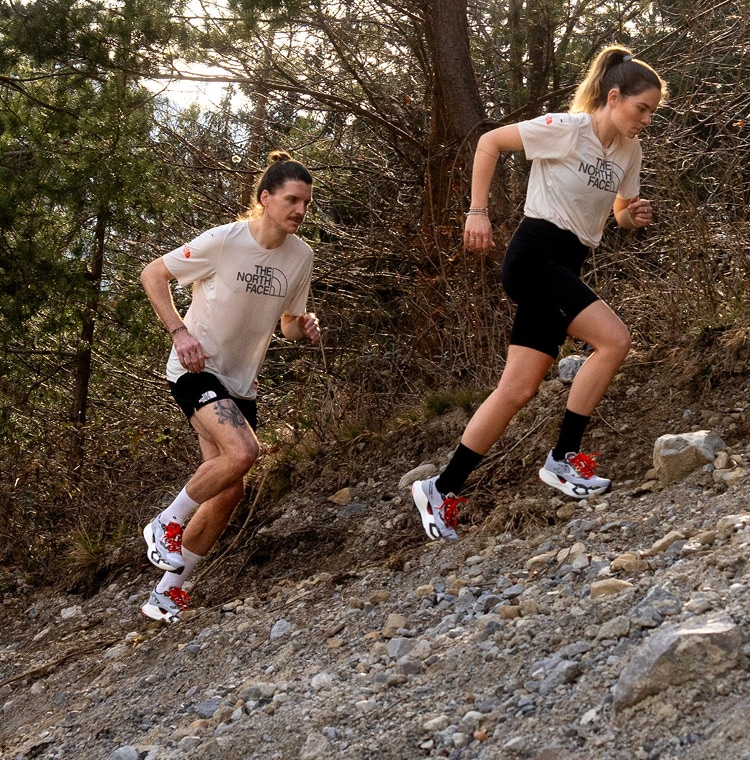
This guide breaks down the key elements of trail running footwear, explains how they function on different surfaces, and outlines when waterproof or breathable constructions make sense. It is designed to answer common questions such as what trail running shoes do I need and what is the difference between trail shoes and running shoes, while highlighting The North Face trail and outdoor footwear systems built for real conditions.
Trail shoes vs running shoes.
What is the difference?
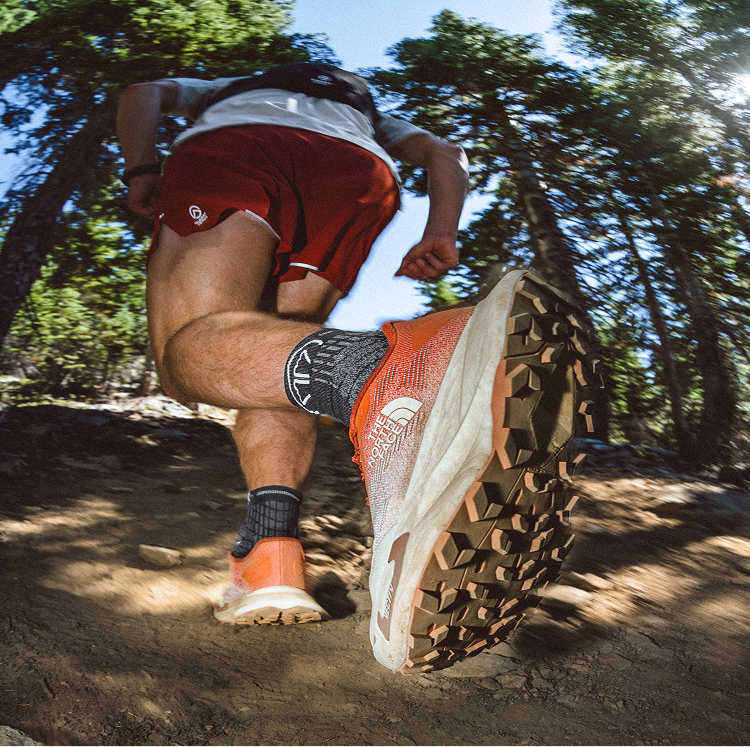
The difference between trail running shoes and road running shoes lies in stability, protection and traction.
Road running shoes are designed for consistent, flat surfaces. They prioritise lightweight cushioning and forward momentum. Trail running shoes, by contrast, are engineered to handle uneven terrain, loose ground and environmental exposure.
Key differences include:
Outsoles with aggressive grip patterns to maintain traction on mud, rock, gravel and wet surfaces
Protective uppers and reinforced toe caps to guard against roots, stones and debris
More stable platforms to support lateral movement on technical trails
Optional waterproof or water-resistant constructions for wet and cold conditions
For runners transitioning from road to trail, footwear choice plays a critical role in confidence, efficiency and injury prevention.
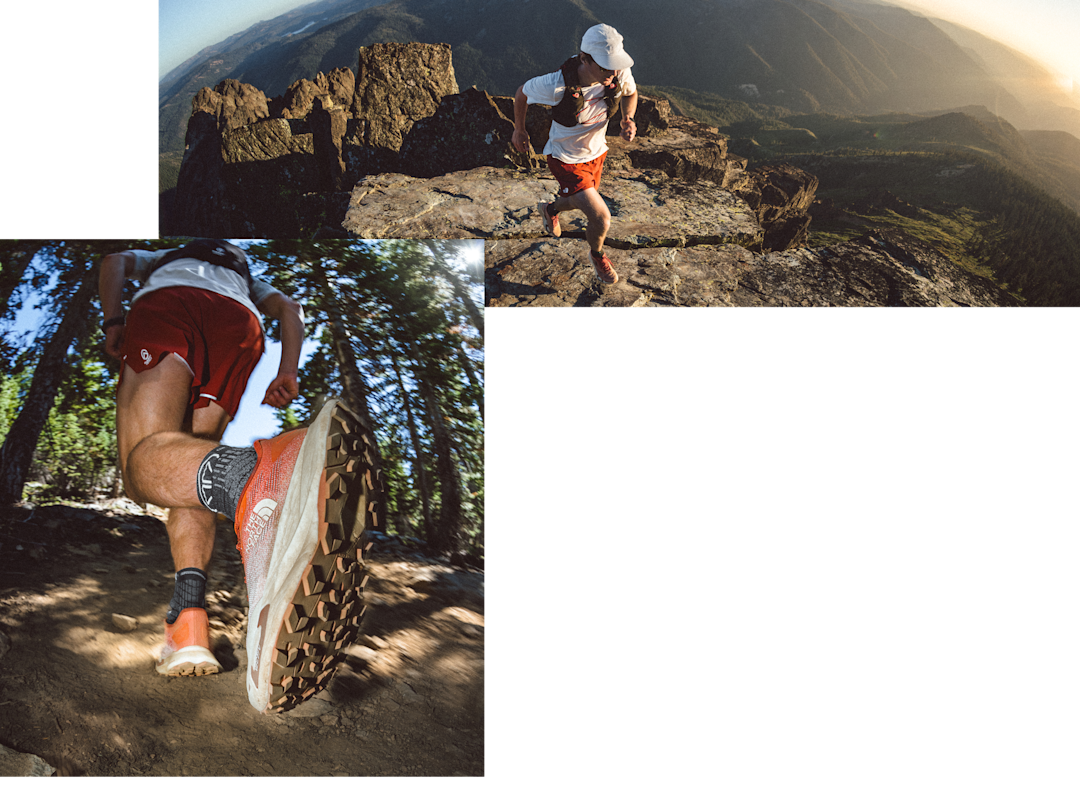
Understanding trail running shoe grip
Grip is one of the most important features of trail running shoes. It determines how effectively the shoe interacts with the ground and how confidently a runner can move across changing terrain.
Lug depth and outsole patterns
Trail running shoes use multidirectional lugs that bite into the ground. The depth and spacing of these lugs influence performance:
Shallow, closely spaced lugs suit hard-packed trails, gravel paths and mixed terrain
Deeper, more aggressive lugs perform better in mud, snow and loose conditions
Shoes designed for alpine or technical terrain often prioritise precise edging and stability on rock, while softer trail shoes focus on flexibility and ground feel.
Rubber compounds and surface contact
Grip is also affected by the rubber compound used in the outsole. Softer compounds provide enhanced traction on wet rock and roots, while firmer compounds offer durability over long distances.
Trail running footwear from The North Face is engineered to balance traction and longevity, supporting performance across varied terrain rather than a single surface type.

Trail running shoe cushioning.
How much is enough?
Cushioning affects comfort, impact absorption and energy return. The right level depends on distance, terrain and personal running mechanics.
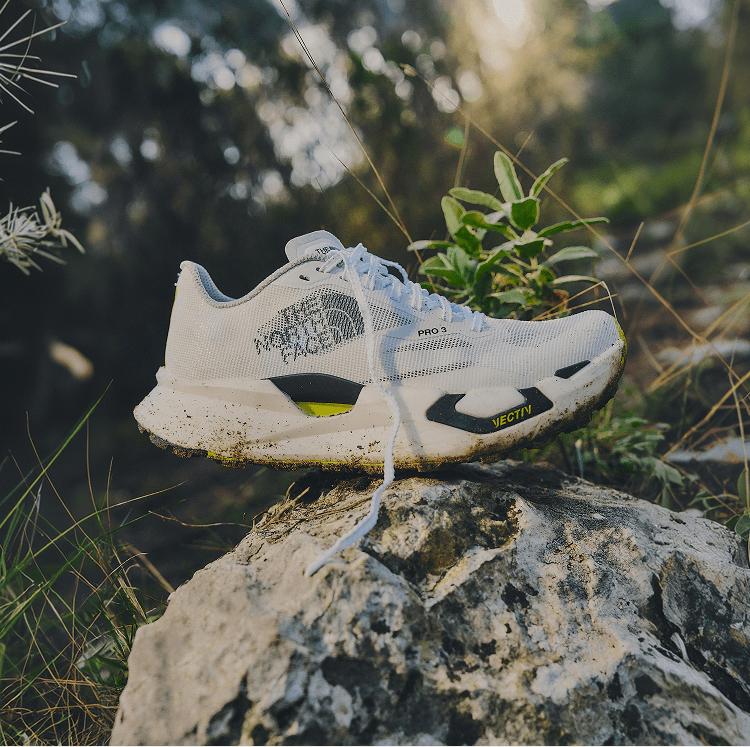
Low to moderate cushioning
Lower-profile trail shoes provide a more responsive feel and greater ground awareness. They are often preferred for:
Shorter distances
Technical trails requiring agility and precision
Experienced runners comfortable with less impact absorption
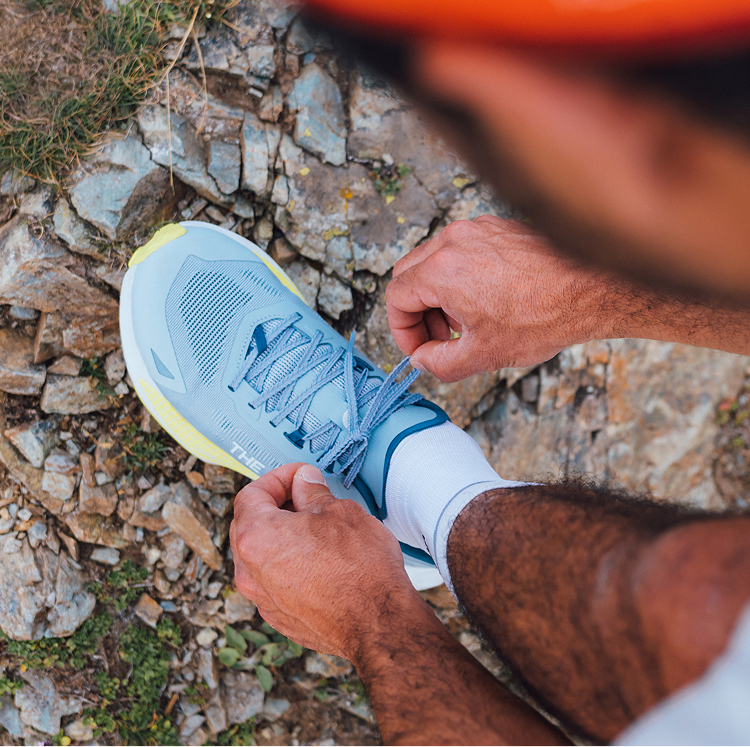
Higher cushioning systems
More cushioned trail running shoes are designed to reduce fatigue over longer distances and repeated impact.
They are well suited to:
Long-distance trail runs and ultras
Hard or rocky terrain
Runners seeking added comfort and joint protection
The Altamesa trail running shoes, available in men’s and women’s fits, are built to balance cushioning and stability for extended trail use, making them suitable for mixed terrain and longer sessions.
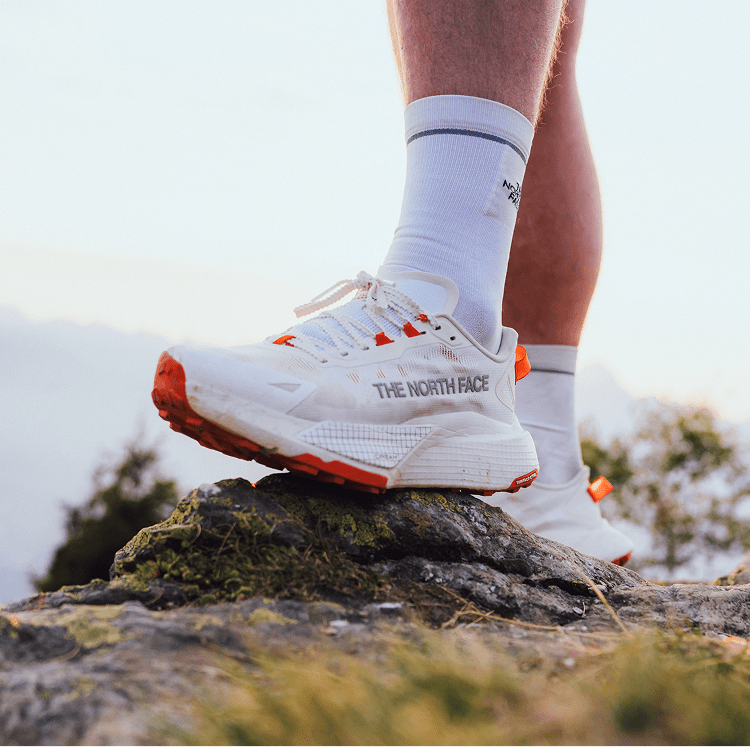
DreamFoam™ cushioning systems
Cushioning technologies also influence how a trail shoe feels over distance. DreamFoam™ is engineered to deliver lightweight shock absorption with a balanced level of responsiveness, helping reduce impact fatigue without compromising ground feedback. On mixed or hard-packed terrain, this type of cushioning supports longer efforts by softening repetitive impact while maintaining stability underfoot.
For runners prioritising comfort across extended trail sessions, midsole systems like DreamFoam™ provide a blend of protection and energy return suited to varied conditions.
Stability and support on uneven terrain
Trail running involves frequent changes in direction, elevation and surface firmness.
Stability features help control foot movement and maintain balance.
Key stability elements include:
Wider platforms
for improved
ground contact
Structured midsoles
that
reduce excessive torsion
Secure lacing systems
that lock the foot in place
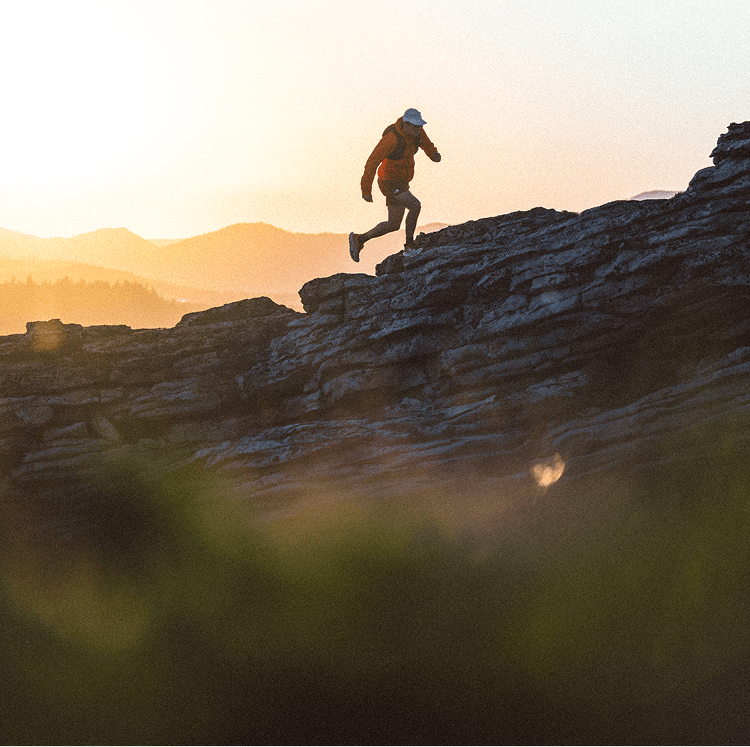
These features are particularly important on technical descents and off-camber trails, where uncontrolled movement can lead to fatigue or injury.
VECTIV™ propulsion technology
Some trail running shoes are built around integrated performance systems rather than standalone features. VECTIV™ technology combines a rockered midsole geometry with a stabilising plate and high-rebound cushioning to maximise forward propulsion while maintaining control on uneven terrain.
The curved sole design helps guide momentum through each stride, while the plate adds torsional stability on technical trails. For longer distances or high-output efforts, this system is designed to reduce energy loss and improve efficiency across mixed and unpredictable surfaces.
Summit VECTIV™ Pro 3.
Advanced performance for technical terrain
At the highest end of The North Face trail running range, the Summit VECTIV™ Pro 3 represents the most advanced application of VECTIV™ propulsion technology.
Engineered for competitive trail running and demanding alpine routes, it combines a performance-driven plate system with responsive cushioning and a high-traction outsole designed for technical terrain. Built to support efficiency and control at speed, it is designed for runners pushing distance, elevation and pace in unpredictable conditions.
Waterproof trail running shoes.
When do you need them?
Waterproof trail running shoes are designed for wet, cold or unpredictable environments.
They use membranes that prevent water ingress while allowing heat and moisture to escape.
When waterproof makes sense:
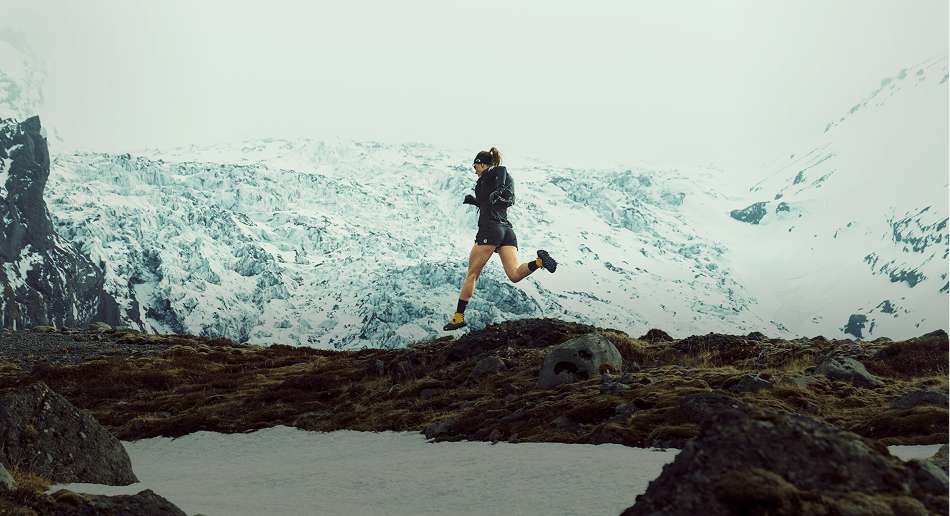
Winter trail running
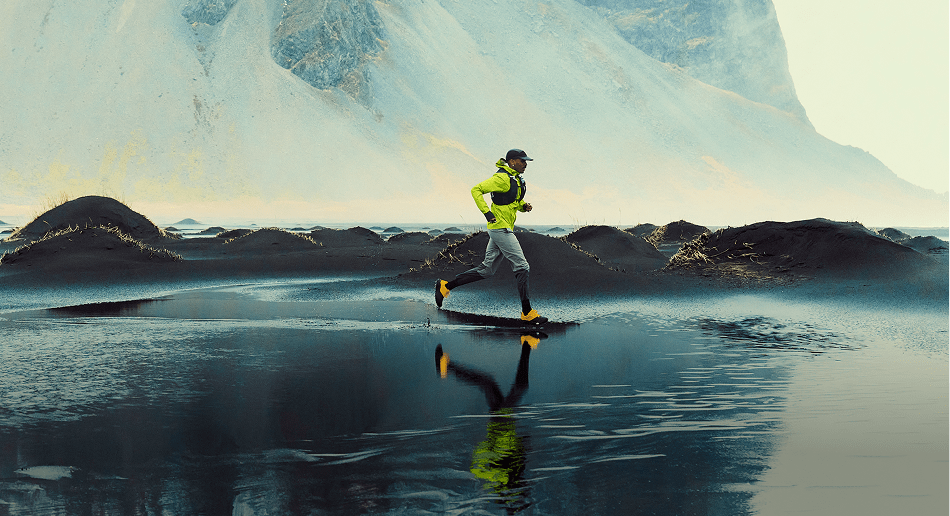
Snow, slush and standing water
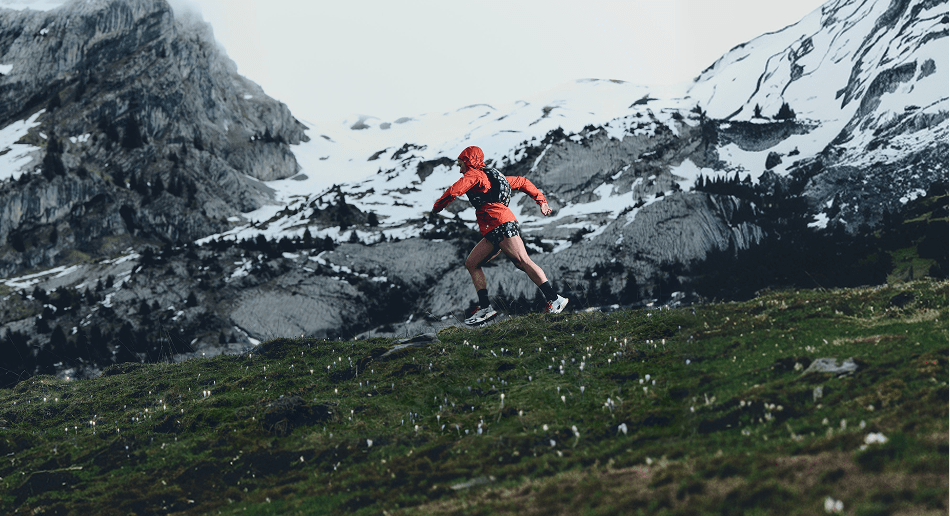
Cold conditions where wet feet increase heat loss
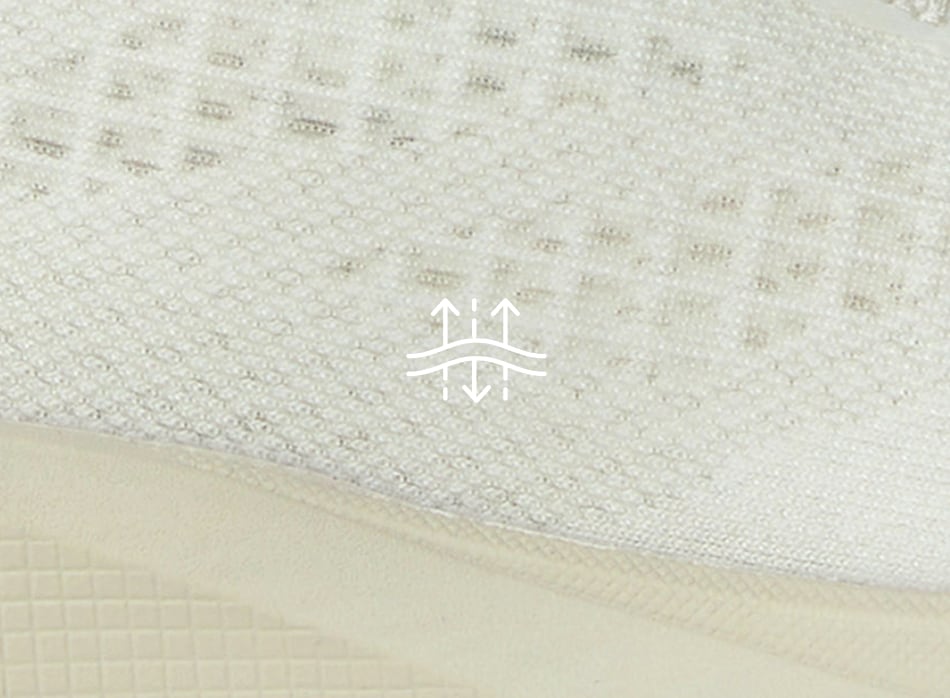
When is breathable better for footwear?
In dry or warm conditions, non-waterproof trail running shoes often perform better. Increased breathability helps regulate temperature and reduces moisture build-up from sweat.
Choosing between waterproof and non-waterproof options depends on climate, terrain and run duration rather than a single best option.
Matching trail running shoes to terrain
Different environments demand different footwear characteristics.
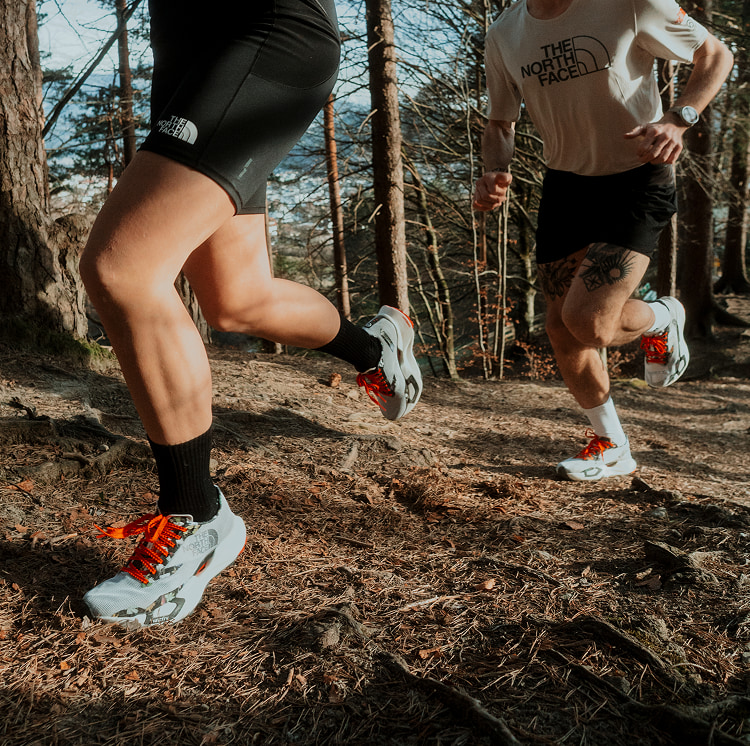
Mixed terrain and everyday trail use
For runners moving between gravel paths, forest trails and uneven ground, a versatile trail running shoe with moderate grip and cushioning offers the best balance.
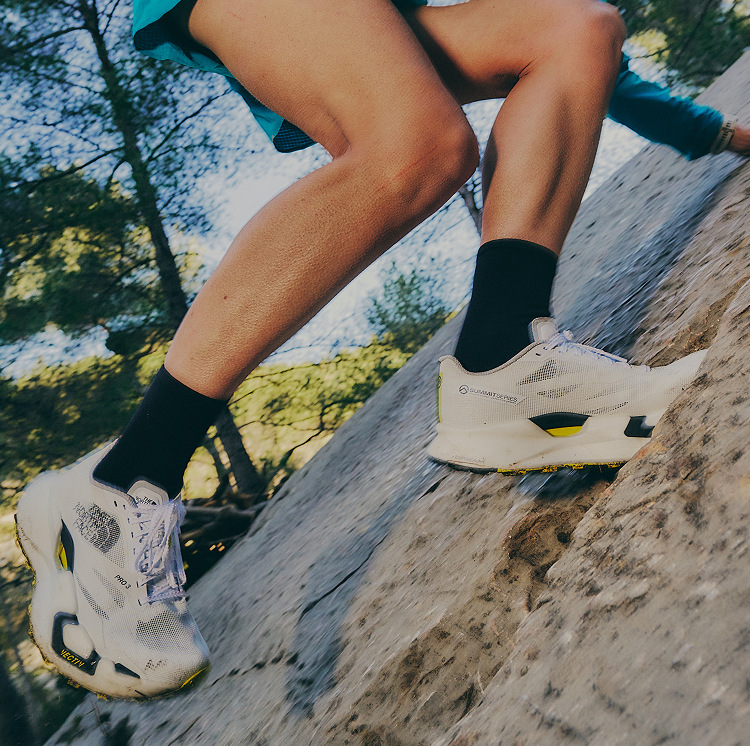
Technical and alpine terrain
Steeper, rockier routes require footwear with enhanced stability, precise fit and high-traction outsoles. Alpine-inspired designs support controlled movement in exposed conditions.
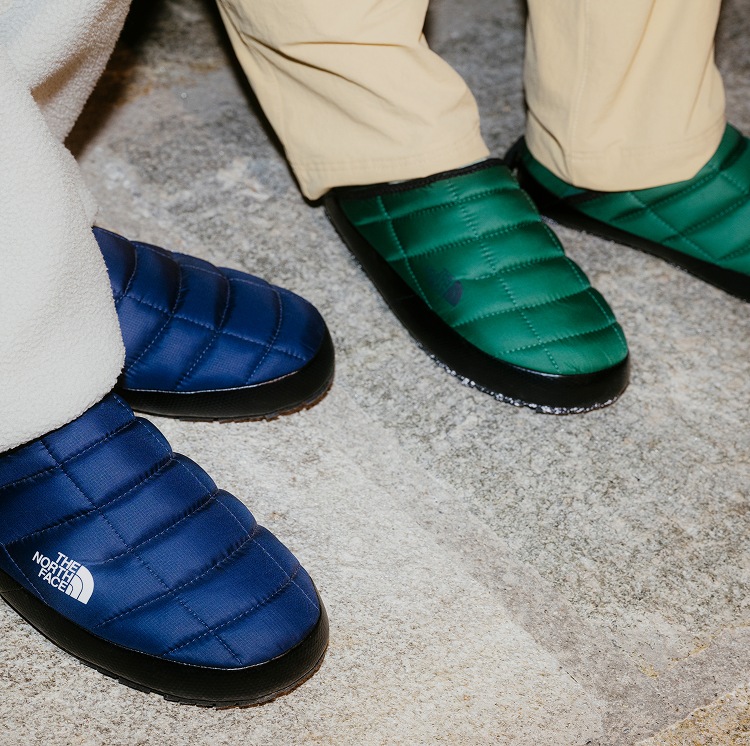
Cold weather and recovery use
While not trail running shoes, insulated footwear such as ThermoBall booties and traction mules are designed for cold-weather recovery, campsite use and pre- or post-run warmth. They complement trail footwear systems during winter training blocks and outdoor travel.
Frequently asked questions about trail running shoes
Beginners should look for trail running shoes with moderate cushioning, reliable grip and a stable platform. Avoid overly aggressive or highly specialised models initially. Comfort and confidence are the priority.
No. Waterproof trail running shoes are best for cold and wet environments. In warm or dry conditions, breathable shoes are often more comfortable and efficient.
Some trail running shoes can be used for fast hiking or mixed activity days. However, dedicated hiking boots provide more support and protection for carrying heavier loads or extended walking.
Trail running shoes should fit securely without pressure points. A locked-in heel and room in the toe box for natural movement are key, especially on descents.
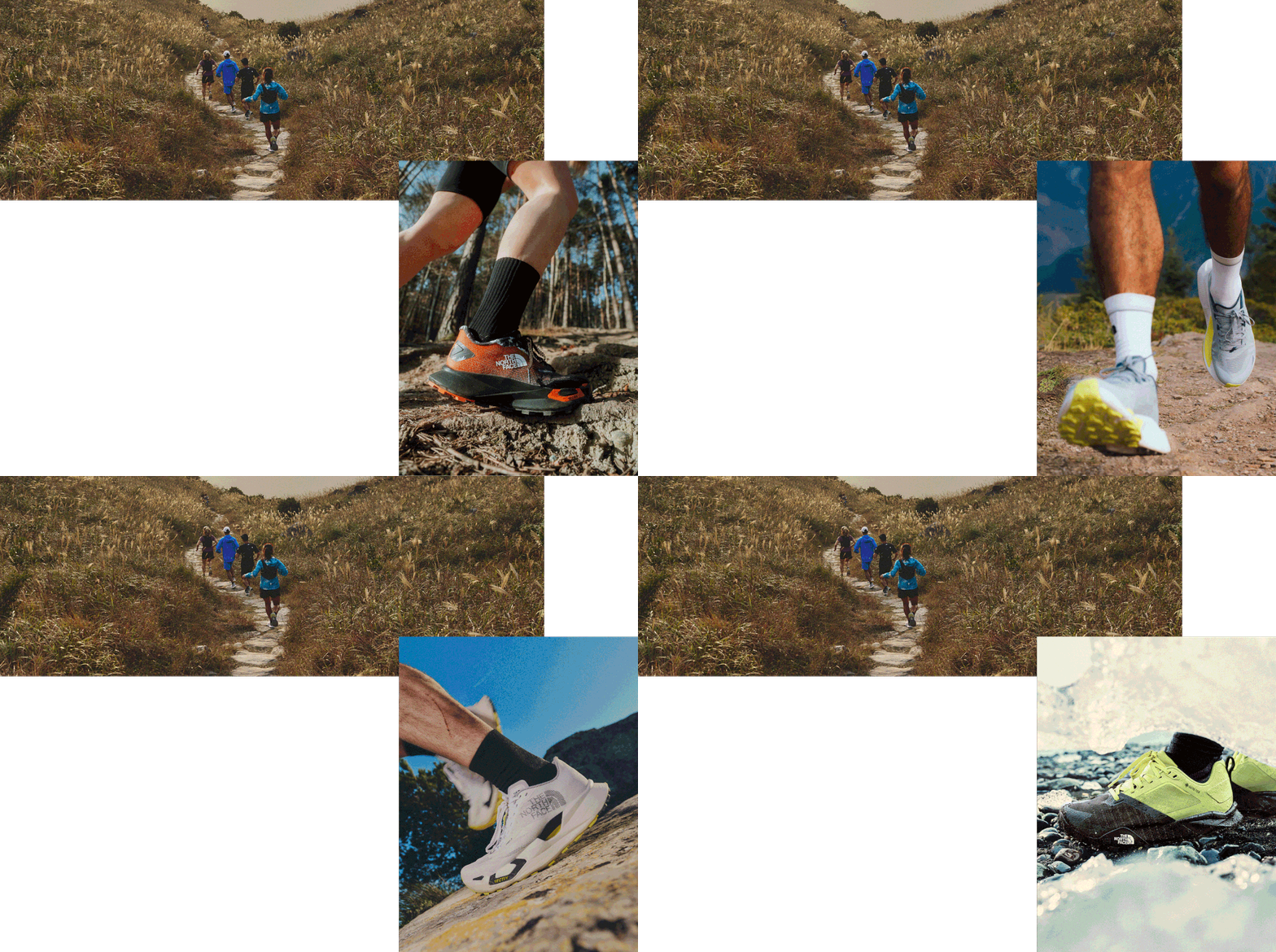
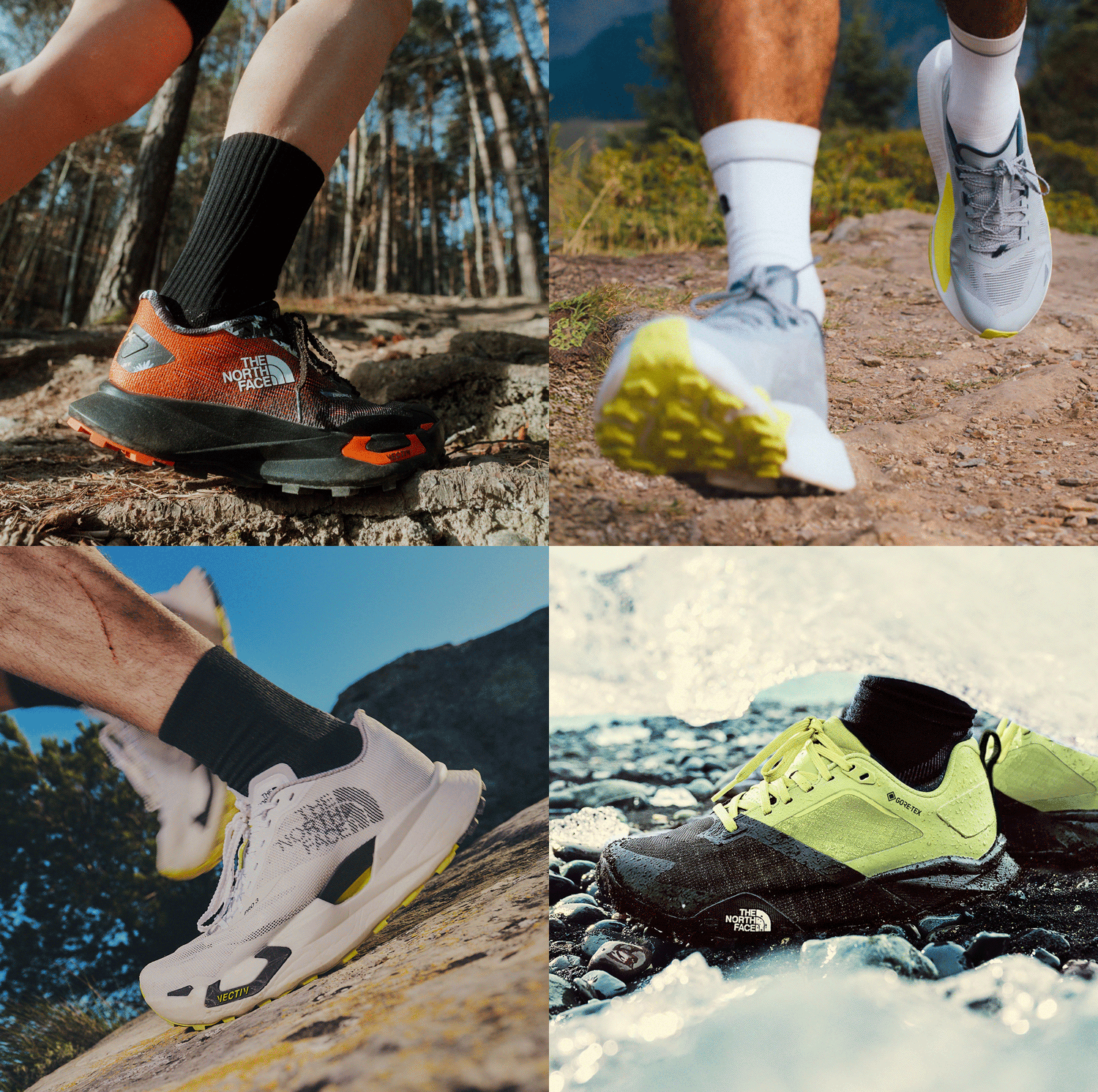
Choosing trail running footwear with confidence
The best trail running shoes are the ones that match terrain, distance and conditions. Grip, cushioning, stability and weather protection all play a role, but no single shoe suits every trail.
The North Face The Footwear Finder helps narrow that choice. By answering a few quick questions, you can explore trail running shoes and outdoor footwear matched to your environment, movement and performance needs, from technical alpine routes to everyday trail runs and cold-weather conditions.
The trail and outdoor footwear range is built around real-world use, from technical alpine environments to everyday trail running and cold-weather recovery. By understanding how footwear features align with terrain and conditions, runners can make informed choices that support performance, comfort and durability across every run.