
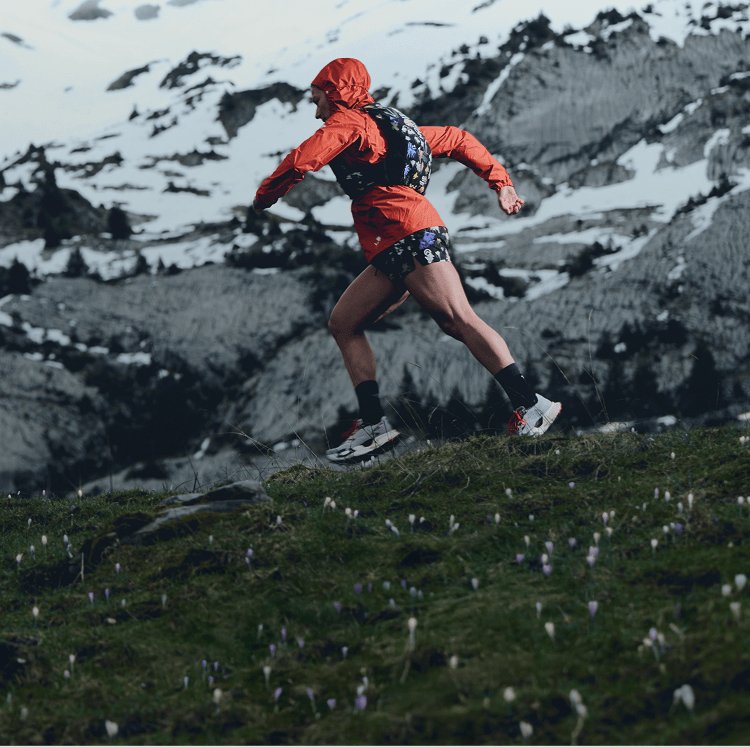
How to Layer for Trail Running
in Cold Weather
Cold-weather trail running is rarely limited by temperature alone. Wind exposure, changing elevation and fluctuating effort levels all influence how warm or cold the body feels once you are moving. Layering for winter trail runs is less about insulation and more about control. The goal is to manage heat and moisture while staying protected when conditions shift.
This guide explains how to layer for trail running in cold weather, breaking down how base layers, midlayers and shells work together during high-output movement. It focuses on effort-based layering, wind protection and adaptability, helping answer questions like what should I wear for trail running in winter while reinforcing The North Face approach to performance layering in cold environments.
Start with effort, not the forecast
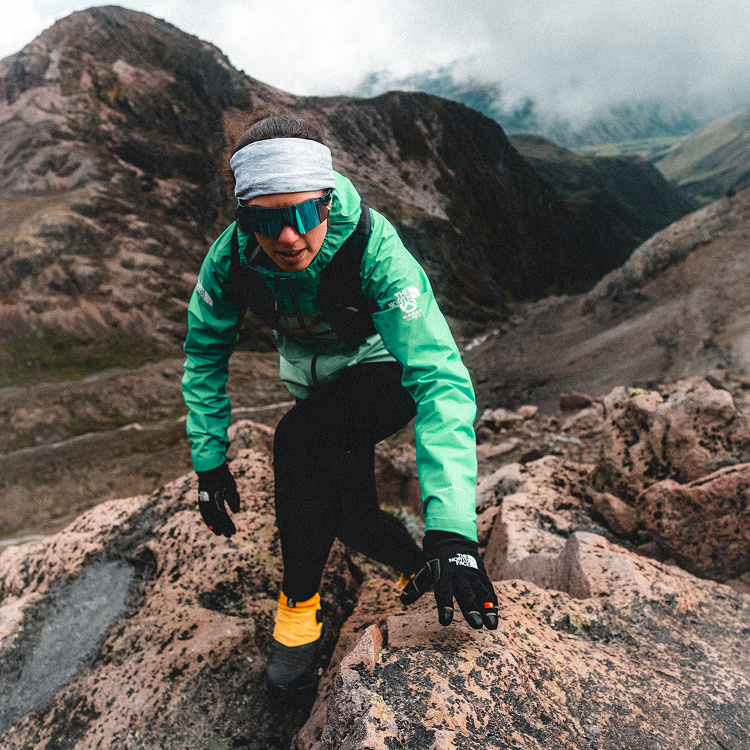
Trail running generates heat quickly, even in winter. Long climbs, technical terrain and sustained effort can raise body temperature far beyond what the air temperature suggests. At the same time, descents, pauses and exposed sections can cause rapid heat loss if layers are poorly managed.
Effective winter layering is built around this constant change. Rather than dressing for the coldest moment of the run, layers should support movement first, then protect when conditions demand it. Breathability, weight and packability matter as much as insulation value.
Base layers that regulate heat and moisture
The base layer sits next to the skin and plays a critical role in temperature regulation. During trail running, its primary job is to move moisture away from the body as effort increases. Trapped sweat leads to cooling once pace drops, which is why cotton and heavy fabrics are unsuitable for winter runs.
Lightweight synthetic base layers provide consistent moisture management without holding excess heat. They allow runners to warm naturally through movement rather than relying on insulation. For cold-weather trail running, a fitted long-sleeve base layer offers enough coverage while remaining breathable under higher output.
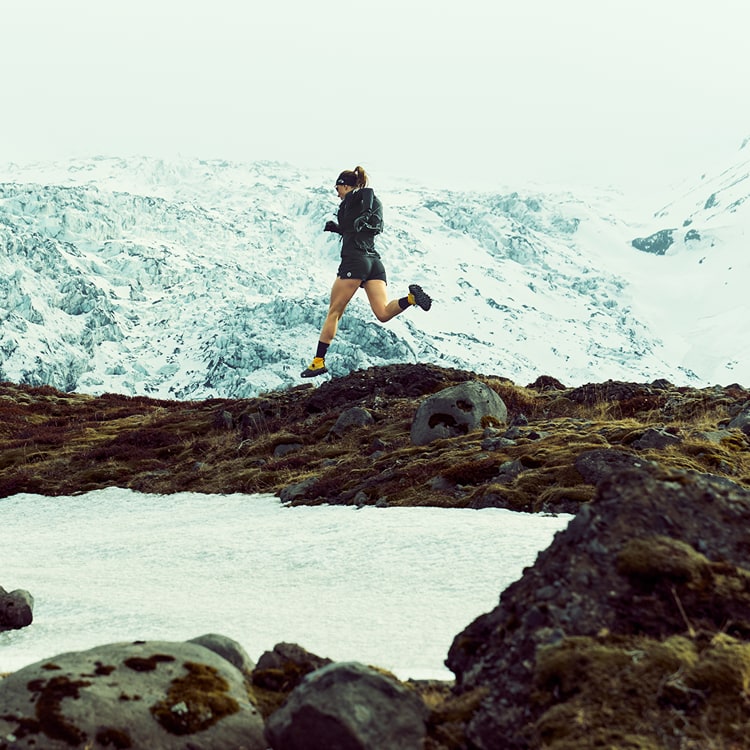
Technologies such as FlashDry™ are designed to enhance moisture management during high-output movement. By accelerating drying time and helping move sweat away from the skin, FlashDry™ fabrics support more consistent temperature regulation on climbs and reduce cooling during descents.
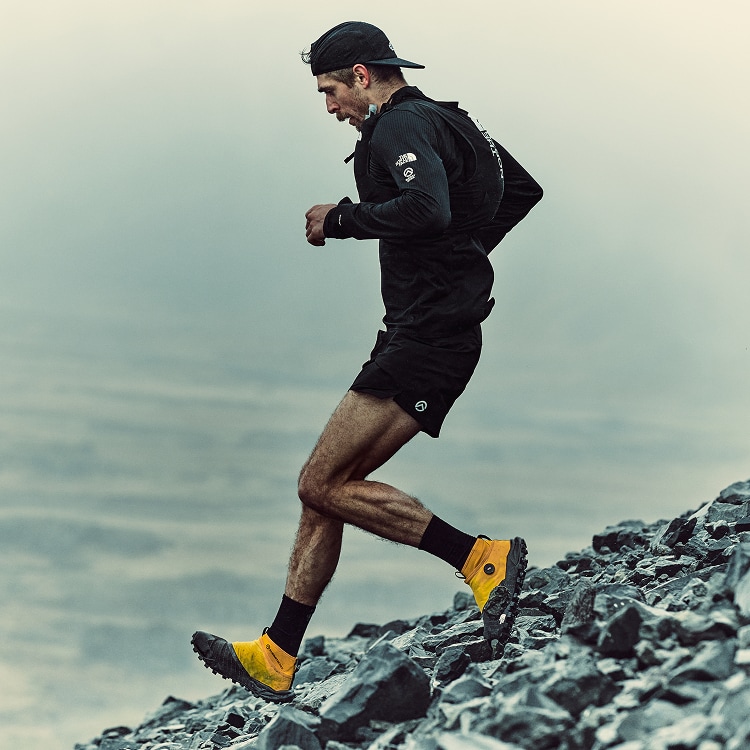
Within the trail running range, Summit Series represents
The North Face’s pinnacle performance tier. These pieces are engineered for technical terrain, sustained effort and exposure, using advanced fabric technologies and precision construction to reduce weight while maximising breathability and protection. When included in this guide, Summit products signal the highest level of performance within the layering system.
In cold-weather trail running, this type of performance-driven
fabric helps maintain comfort without adding unnecessary weight
or insulation.
Midlayers that adapt to changing intensity
Midlayers are optional, but valuable in colder conditions or longer winter runs. The key is choosing insulation that responds to movement rather than fighting it. Heavy down or static insulation traps heat quickly, which can become uncomfortable once effort rises.
Fleece midlayers strike the right balance for trail running. They retain warmth during cold starts and exposed sections while allowing heat to escape during sustained effort. Their structure also makes them easy to layer under a shell without restricting movement.
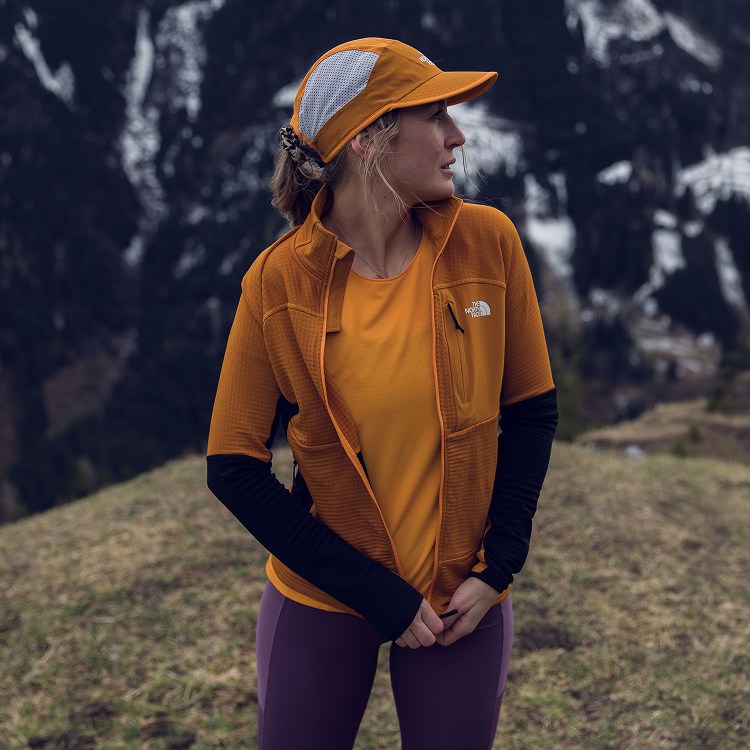
Lightweight insulation for colder trail days
In consistently low temperatures or lower-intensity trail sessions, a lightweight insulated layer can add comfort. The emphasis here is restraint. Insulation should support warmth without overwhelming breathability.
Shell layers for wind and weather control
Wind is often the biggest factor in winter discomfort. Even light wind can strip heat quickly, particularly on ridgelines or exposed terrain. A shell layer protects against this heat loss while shielding from rain or snow.
For trail running, shells need to balance protection with breathability. Overbuilt waterproof jackets can trap heat, while lightweight shells allow moisture to escape while blocking wind and precipitation.
Ventilation, flexibility and packability all matter when choosing a running shell.
Lower-body layering in winter conditions
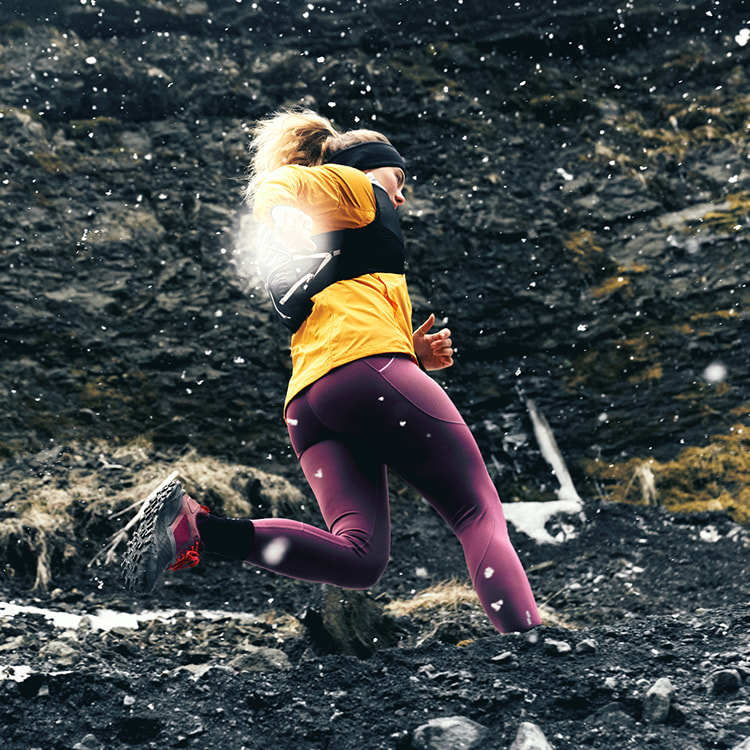
The lower body generates more heat during running, which means less insulation is usually required. However, in cold or windy conditions, lightweight running leggings help maintain comfort without restricting movement.
Breathable, stretch-focused leggings provide warmth while supporting a full range of motion on uneven terrain. They are often enough on their own for winter trail runs, especially when paired with a well-managed upper-body layering system.
What not to wear for trail running in winter
Not all cold-weather jackets are designed for movement. Heavy parkas, long insulated coats and 3-in-1 systems are built for static warmth rather than sustained effort. While effective for everyday winter use, they restrict airflow and trap heat during trail runs.
Similarly, city-focused insulation prioritises warmth over breathability and should be avoided when running. Trail layering works best when each piece serves a specific performance role rather than trying to do everything at once.
Frequently asked questions about winter trail running layers
Start with a moisture-wicking base layer, add a breathable midlayer if temperatures are low, and finish with a lightweight shell for wind or rain. Adjust layers based on effort and exposure rather than dressing for static cold.
Down is not ideal for high-output running. Lightweight insulation can work in very cold conditions at moderate effort, but breathability should always take priority.
In wet, windy or exposed environments, a waterproof shell helps retain heat and protect against wind chill. In dry, cold conditions, a wind-resistant shell may be enough.
Most winter trail runs require two to three layers at most. Over-layering increases sweat build-up and can lead to feeling colder over time.
Winter trail running layering by temperature and intensity
Use the guide below as a quick reference for layering by temperature and effort level, helping match base, mid and outer layers to real winter trail conditions.
The temperature ranges below are indicative rather than prescriptive. Layer recommendations are based on effort level, breathability and protection needs rather than fixed insulation ratings.
TEMPERATURE | EFFORT LEVEL | BASE / | MIDLAYER | OUTER LAYER | WOMEN’S EXAMPLE PRODUCTS | MEN’S EXAMPLE PRODUCTS |
5°C to 10°C | High output | Lightweight moisture-wicking short or long sleeve | Optional lightweight fleece | Wind-resistant shell if exposed | Women’s Sunriser T-Shirt Women’s Summit Altimetro Long-Sleeve Top (Summit Series) | Men’s Sunriser T-Shirt Men’s Summit Altimetro Long-Sleeve Top (Summit Series) |
0°C to 5°C | Moderate to high | Breathable long-sleeve base layer | Lightweight fleece | Lightweight wind or water-resistant jacket | Women’s Winter Warm Pro 1/4 Zip Fleece Women’s Fontanales Wind Gilet | Men’s Summit Altimetro Long-Sleeve Top Men’s Fontanales Jacket |
-5°C to 0°C | Moderate effort | Thermal next-to-skin layer | Insulating fleece | Protective shell jacket | Women’s Summit Altimetro Long-Sleeve Top Women’s Fontanales Jacket | Men’s Summit Altimetro Long-Sleeve Top Men’s Fontanales Jacket |
Below -5°C | Variable effort | Insulating base layer | Performance fleece | Weather-protective shell | Women’s Winter Warm Pro 1/4 Zip Fleece Women’s Fontanales Jacket | Men’s Summit Altimetro Long-Sleeve Top Men’s Fontanales Jacket |
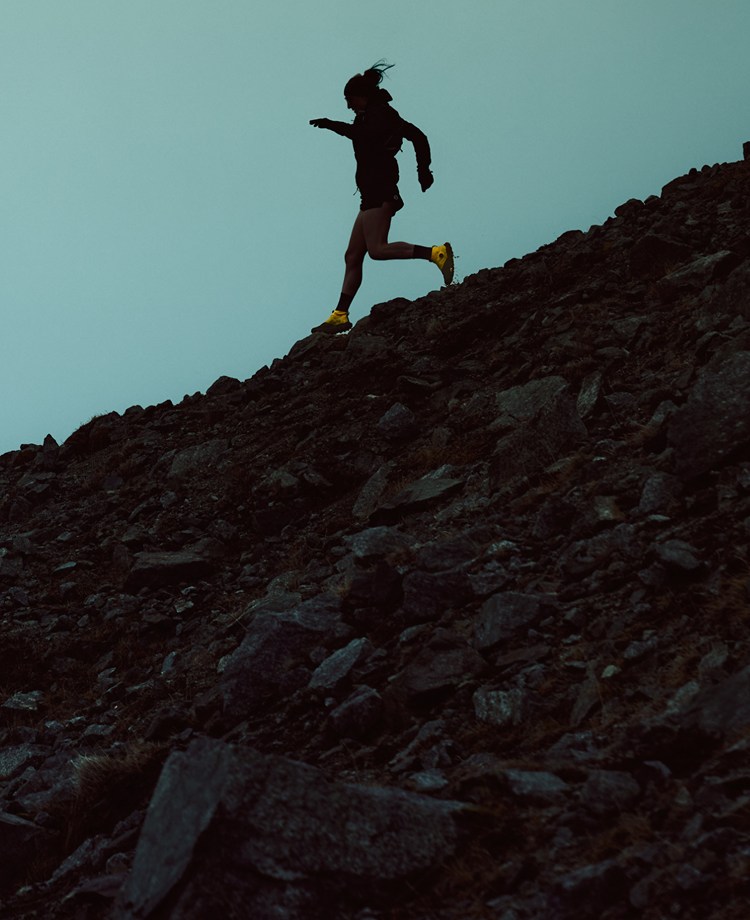
Layering with purpose on winter trails
Successful cold-weather trail running depends on adaptability. The most effective layering systems are lightweight, modular and built around movement, not static warmth.
Recommended winter trail running layers
To translate layering principles into a practical kit, the following pieces are designed to support cold-weather trail performance across varying intensities.
Women’s trail running layers:

For high-output base layers, the Women’s Summit Altimetro Long-Sleeve Top and Women’s Sunriser T-Shirt prioritise breathability and moisture management.
For lower-body movement, the Women’s Summit Pacesetter 3” Shorts are built for lightweight performance, while colder conditions call for insulating midlayers such as the Women’s Winter Warm Pro 1/4 Zip Fleece.
For wind protection and adaptable layering, the Women’s Fontanales Wind Gilet and Women’s Fontanales Jacket provide lightweight shielding without restricting movement.
Men’s trail running layers:
For breathable next-to-skin performance, the Men’s Summit Altimetro Long-Sleeve Top and Men’s Sunriser T-Shirt support moisture regulation during sustained effort.
For unrestricted lower-body movement, the Men’s Sunriser 5” Shorts are suited to fast sessions, while the Men’s Fontanales Jacket offers lightweight protection against wind and changing weather.
These pieces are designed to function within a modular layering system,
allowing runners to adjust warmth and protection according to terrain, intensity and exposure.
For runners operating in exposed alpine terrain or consistently harsh winter conditions,
The North Face Summit Series sits at the top of the trail running hierarchy. Built for technical environments and sustained high-output performance, Summit pieces prioritise lightweight construction, advanced fabric innovation and precise fit to manage heat and exposure without unnecessary bulk.
Within the broader trail running range, these sit at the highest level of performance, with more accessible trail layers offering similar functionality for everyday winter training and mixed-terrain sessions.
By understanding how base layers, midlayers and shells interact during high-output runs, runners can stay comfortable across changing terrain and conditions. The North Face trail running pieces are designed to support this balance, helping runners manage heat, moisture and exposure through every winter mile.